There are 3 different main types of Mangroves: Black, Red, and White.
The Blank and Red Mangroves, while similar in height, have a few differences. The black Mangrove traps its oxygen with bristle like roots, and the seeds are edible! The Red Mangrove is an evergreen with aerial roots, while the White Mangroves are the shortest of the three. Mangroves provide many benefits that deserve to be protected. First, mangroves provide homes to many different plants and animals. They also protect shores from waves and protect against costal erosion. Another important aspect is that mangroves protect areas on land from storm damage. The Black Mangrove's wood is used for the making of fishing poles, as well as the White Mangrove which is also greatly used for other tools. All can provide shelter for fish, especially crab, all of these are very beneficial to fishing industries
photo: http://www.tomcravens.com/Red%20roots.JPG
Sunday, February 24, 2013
garbage patch
An ocean garbage patch is concentration of marine debris located in the North Pacific Ocean.
It is formed by man made liter and debris, especially tiny plastic pieces barely visible and nets. The fish and animals eat the plastics and get poisoned, or choke, on them, and can also get caught or harmed in the plastic. While attempts have been made to clean these garbage patches, it is mostly unsuccessful since they are so vast and changing. To stop this for the future, there should be stronger disposal and recycling requirements so less garbage can liter the ocean.
picture: http://assets.knowledge.allianz.com/img/pacific_ocean_garbage_patch_pollution_plastic_albatross_chick_q_48866.jpg
It is formed by man made liter and debris, especially tiny plastic pieces barely visible and nets. The fish and animals eat the plastics and get poisoned, or choke, on them, and can also get caught or harmed in the plastic. While attempts have been made to clean these garbage patches, it is mostly unsuccessful since they are so vast and changing. To stop this for the future, there should be stronger disposal and recycling requirements so less garbage can liter the ocean.
picture: http://assets.knowledge.allianz.com/img/pacific_ocean_garbage_patch_pollution_plastic_albatross_chick_q_48866.jpg
reptiles
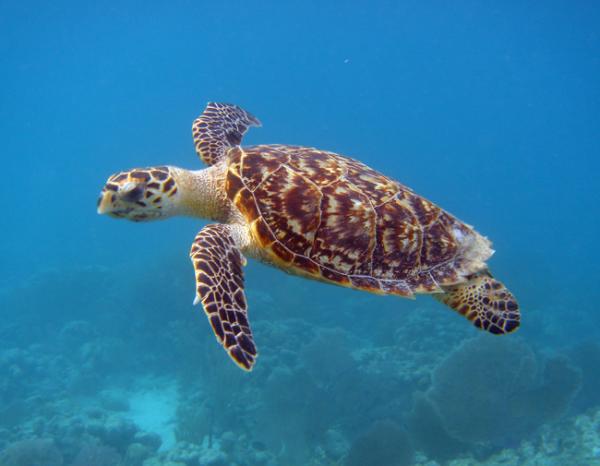
Common name: Hawksbill Turtle
scientific name: Eretmochelys imbricata
Habitat: tropical shallow waters, near coastlines, coral reefs
adaptations: have a slow metabolic level so they can stay under water longer
status: endangered
current issues: their shells are internationally traded, as well as their meat and eggs
I picked this reptile because it is my favorite marine reptile and saw them when snorkeling in Hawaii
picture: http://www.animalspot.net/wp-content/uploads/2012/03/Hawksbill-Sea-Turtle-Pictures.jpg
scientific name: Eretmochelys imbricata
Habitat: tropical shallow waters, near coastlines, coral reefs
adaptations: have a slow metabolic level so they can stay under water longer
status: endangered
current issues: their shells are internationally traded, as well as their meat and eggs
I picked this reptile because it is my favorite marine reptile and saw them when snorkeling in Hawaii
picture: http://www.animalspot.net/wp-content/uploads/2012/03/Hawksbill-Sea-Turtle-Pictures.jpg
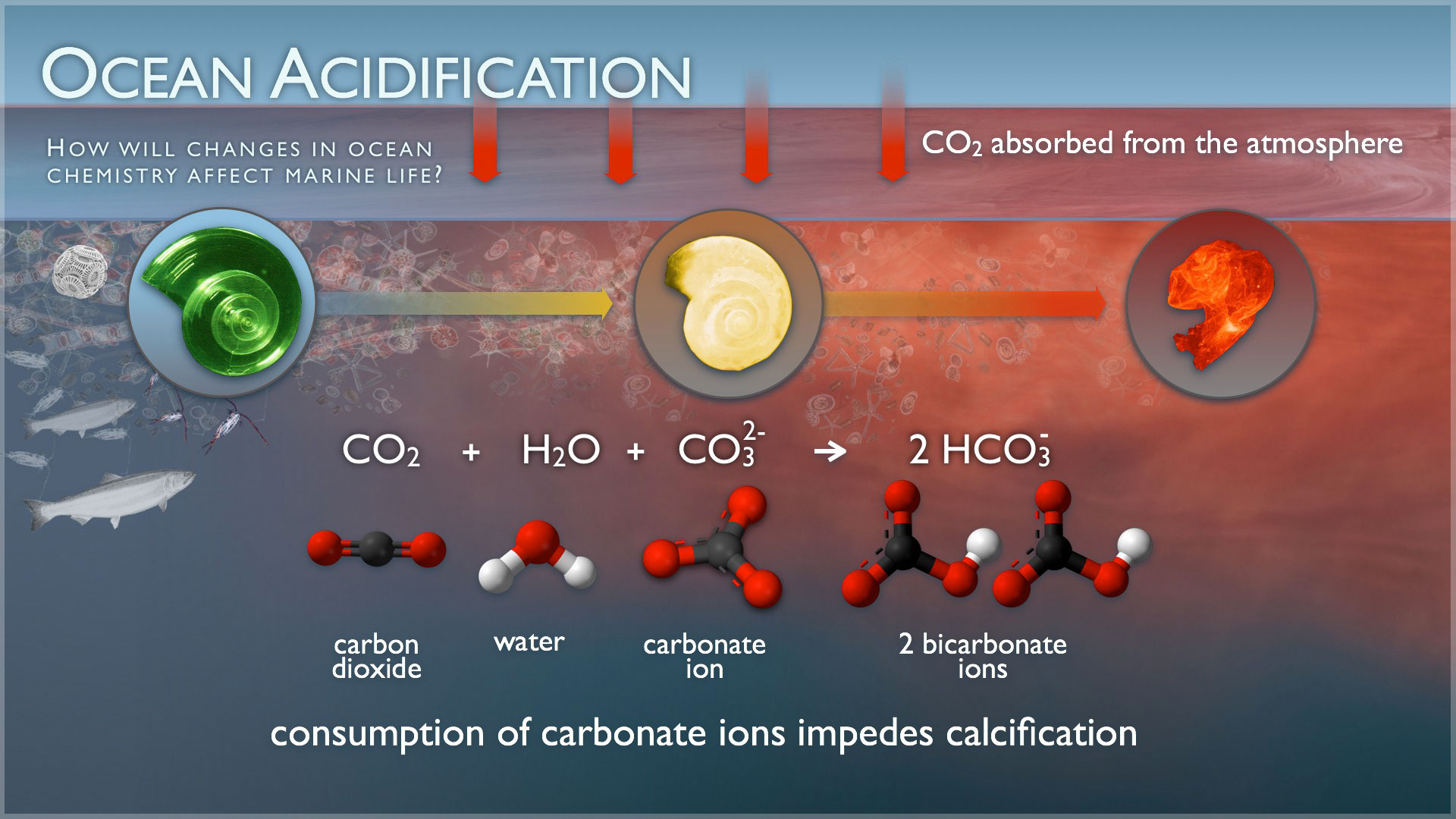
Ocean acidification
Ocean acidification is the carbon dioxide pollution in the ocean. The ocean absorbs 1/4 of the carbon dioxide emitted into the atmosphere by people. It effects ocean life as small as plankton, making it more difficult for them to live and make them use more energy to find shelter. Since this effects the base of the food chain, it will be a domino effect to the larger animals. On a coast in California waters were even found to be corrosive. Some of this water could dissolve shells. Some scientists believe that the ocean's chemistry could be completely changed and the entire ocean ecosystem could be dead in one hundred years.
picture: http://pmel.noaa.gov/co2/files/pmel-oa-imageee.jpg
Monday, February 18, 2013
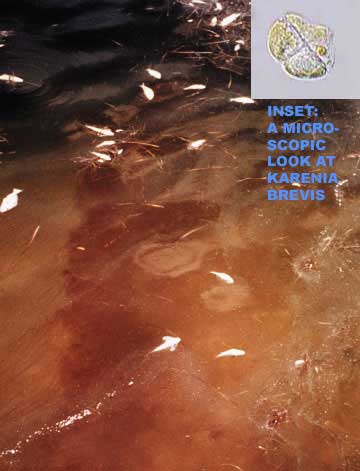
research:Karenia Brevis a dinoflagellate
The Karenia Brevis dinoflagellate creates harmful and very toxic algae blooms called florida red tides. These unicellular organisms may be microscopic, but their toxins (brevetoxins) can kill large quantities of fish and make people very sick. Neurotoxic shellfish poising (NSP) is caused by the ingestion of shell fish such as clams and mussels that have been contaminated with brevetoxins.
Symptoms found in humans may be:
-numbness of mouth, face, and limbs
-nausea
-vomiting
-headache
-slurred speech
-partial paralysis
-difficulty breathing
Brevetoxins lead to the death of numerous fish and animal mortalities.
The gulf coast is greatly effected by K. Brevis and Brevetoxins. The death of all the fish is less food for both people and larger fish, less bait, and causes sickness within people.
picture: http://serc.carleton.edu/images/microbelife/topics/red_tide_advanc.v2.jpg
Symptoms found in humans may be:
-numbness of mouth, face, and limbs
-nausea
-vomiting
-headache
-slurred speech
-partial paralysis
-difficulty breathing
Brevetoxins lead to the death of numerous fish and animal mortalities.
The gulf coast is greatly effected by K. Brevis and Brevetoxins. The death of all the fish is less food for both people and larger fish, less bait, and causes sickness within people.
picture: http://serc.carleton.edu/images/microbelife/topics/red_tide_advanc.v2.jpg
Plankton information!
This week we learned alot about plankton, such as all the different types. For starters, the two main classifications of phytoplankton vs zooplankton. Phytoplankton are plants that use photosynthesis and are producers. Zooplankton are animals that feed on phytoplankton. Plankton are very important to the ecosystem because they are the very base of the food chain/web. Phytoplankton or algae, can create algae blooms, both beneficial and harmful to the environment. Harmful Algae blooms, HABs produce toxins that can harm both fish and humans. The Red tide is an example caused by phytoplankton. Two types of Phytoplankton are Diatoms and Dinoflagellates. Diatoms are single celled algae, and Dinoflagellates have qualities of both zooplankton and phytoplankton.
pictures: http://www.commondreams.org/headlines06/images/0119-03.jpg
Dolphin
Common name: Atlantic Spotted Dolphin
Scientific Name: Stenella Frontalis
Habitat: Only in the Tropical areas of the Atlantic ocean such as the Bahamas
Reproduction: Females give birth every one to five years
Status: Currently endangered
Interesting facts:
Major issues facing this animal: They are hunted and captured in the Caribbean Sea, for food and bait by fisheries.
I chose this animal because it seemed intriguing and is an endangered species
picture: http://www.seasky.org/reeflife/assets/images/dolphin_atlantic_spotted.jpg
Scientific Name: Stenella Frontalis
Habitat: Only in the Tropical areas of the Atlantic ocean such as the Bahamas
Reproduction: Females give birth every one to five years
Status: Currently endangered
Interesting facts:
- Considered an "acrobatic species" that likes to play and chase waves from boats
- can be underwater for 6 minutes, diving up to 60 meters
- make sounds for echolocation like chirping and whistling
Major issues facing this animal: They are hunted and captured in the Caribbean Sea, for food and bait by fisheries.
I chose this animal because it seemed intriguing and is an endangered species
picture: http://www.seasky.org/reeflife/assets/images/dolphin_atlantic_spotted.jpg
Subscribe to:
Posts (Atom)